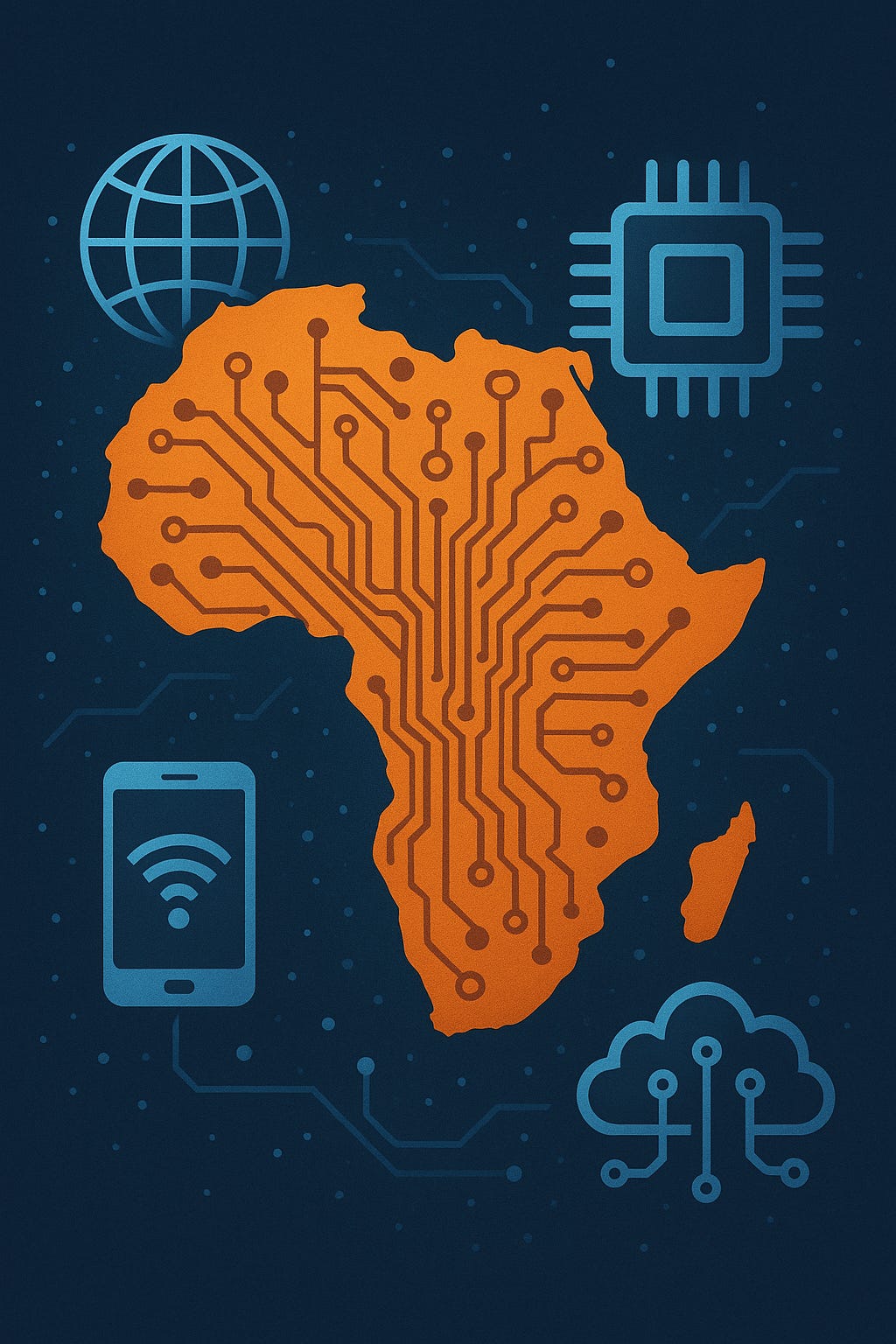
AFRICA’S HIGH TECH GENERATION.

Most of the old generation might resist or refuse to take advantage of the high technology, but to the younger generation, High technology has the potential to play a transformative role in Africa’s development. Across education, healthcare, agriculture, finance, and communication, technological advancement offers tools that can accelerate progress in ways traditional systems could not. While high-tech solutions may not always be environmentally friendly in their early stages, their overall impact on human development and knowledge creation is profound.
One of the greatest contributions of high technology is its ability to build a new generation with advanced skills and a modern mindset. Access to digital tools, the internet, and innovative platforms exposes young Africans to global knowledge, ideas, and opportunities. This exposure not only improves technical competence but also encourages critical thinking, creativity, and problem-solving—skills that are essential for long-term development.
Technology also helps bridge gaps that have held Africa back for decades. Online education reduces barriers to learning, digital finance promotes financial inclusion, and modern agricultural technologies improve productivity and food security. These advancements empower individuals and communities, allowing them to participate more actively in both local and global economies.
Although concerns about environmental impact are valid, technological growth should not be viewed as an enemy of sustainability. Instead, it can be seen as a stepping stone toward it. As knowledge and innovation increase, so does the capacity to develop cleaner energy, smarter infrastructure, and environmentally friendly solutions tailored to Africa’s realities. The initial costs of technological expansion can eventually lead to more efficient and sustainable systems.
In the long run, Africa’s development will depend not only on natural resources but also on human capital. High technology strengthens this human capital by equipping people with knowledge, skills, and confidence. When guided by responsible policies and local innovation, technology can help Africa build a future that is progressive, inclusive, and sustainable.